

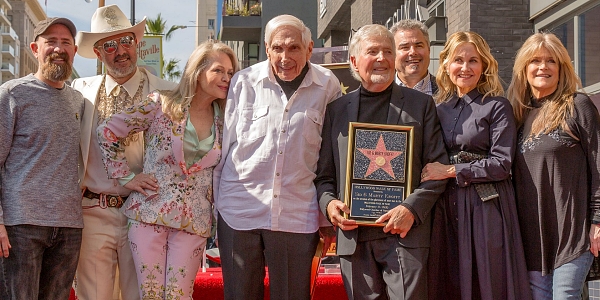
On the day before Valentines Day in 2020, Sid and Marty Krofft received a love letter of their own in the form of a star placed on the Hollywood Walk of Fame in front of the Funko store. David Arquette, Beverly D’Angelo, three of the Brady Bunch Kids (Christopher Knight, Susan Olsen and Maureen McCormick) and Greg Garcia were on hand at the presentation of the 2,687th star honoring these two brothers who are in their twilight years are still involved with children’s programming. But their legacy didn’t start out that way.
Before TV
Long before H. R. Pufnstuf hit the small screen, Sid was a puppeteer who worked in vaudeville and the Ringling Bros. ad Barnum & Bailey Circus. In the 1940’s he created the one-man puppet show knowns as “The Unusual Artistry of Sid Krofft.”
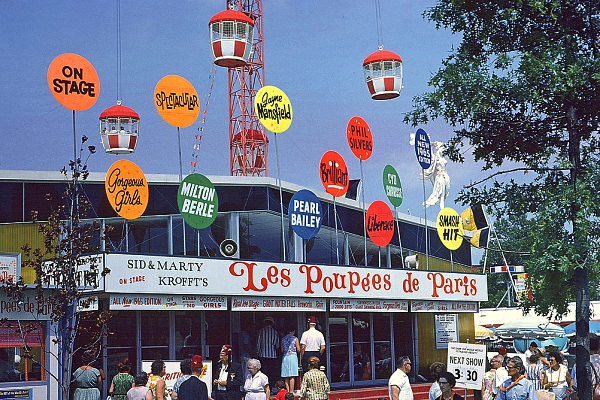
By the 1950’s, the brothers were working together and in 1957, they created the adult-themed Les Poupées de Paris puppet show. Although the show featured characters modeled after various celebrities from Judy Garland to Phil Silvers, it also featured a number of topless puppets too!
The show was brought to the Seattle World’s Fair in 1962 and later to New York’s World’s Fair in 1964. That same year, the Kroffts appeared with puppets on The Dean Martin Show (with tops on by way) but were let go after eight episodes because Martin reportedly felt upstaged by the marionettes. The fan letters he was receiving at the time requested more screen time with the puppets!

In 1968, Hanna-Barbera Studios came knocking on the Krofft’s door asking them to create a set of costumes for a new Saturday morning program called The Banana Splits Adventure Hour. Giving the brothers just a rough layout of what each character should look like, Sid and Marty designed Fleegle (a dog), Bingo (a gorilla), Drooper (a lion) and Snorky (an elephant) who would introduce a variety of animated cartoons. That was their whole involvement. It wasn’t their show. However, the heads of development at NBC took notice and asked the Kroffts why they didn’t create their own show. And that started it all.
Weird or Wonderful?
People typically aren’t shy when talking about Krofft TV shows. There are just as many adults who have fond memories of these creations as there are those who hated them. Sure, they were silly and often included terrible laugh tracks, but these brothers created weird worlds with wonderful characters that were unlike anything else on TV. Everything – for the most part – was nonsensical. But that is what made these shows so much fun.
But as good as the Kroffts are are creating characters and storylines, the two have a bad reputation for not knowing how to end a story. Jimmy and his magic flute never left H. R. Pufnstuf’s Living Island. Mark is probably still stuck in Lidsville. Will and Holly are still searching for a way out of the Land of the Lost. Jerry and Alice never got off of that Lost Saucer and Dr. Shrinker never returned Brad, B.J. or Gordie to their original size.
H. R. Pufnstuf (1969)
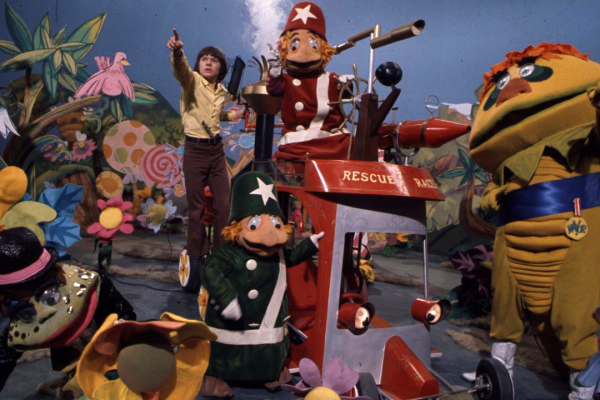
It was at the San Antionio HemisFair in 1968 where inspiration for the Krofft brothers first TV show came from. In addition to the risqué Les Poupées de Paris puppet show, Sid and Marty had also put together a children’s stage show called Kaleidoscope. The latter featured a dragon called Luther and they had hopes of making a Luther Land TV show. NBC was interested, but didn’t like the name. So they came up with Pufnstuf inspired by the song, “Puff the Magic Dragon.” Sid later added H.R. to the name meaning “royal highness” only backwards.
The show began with Jimmy (Jack Wild) and his talking flute Freddy (where did Jimmy get this talking flute?) who boarded a happy-looking boat and I assume talking since it promised to take them on an adventure. And boy did it.
The boat was owned by Wilhelmina W. Witchiepoo (Billie Hayes) and was used as a trap to get them on Living Island so she could steal the flute. Jimmy is rescued by the mayor of the island, H.R. Pufnstuf (voiced by the show’s writer, Lennie Weinrib) and together they spent the next 16 episodes trying to get the boy back home. He never made it.
The name Les Szarvas may not mean anything to you (he wrote the show’s theme song), but you are probably familiar with Paul Simon. He was also credited for the song after he successfully sued the Krofft brothers for mimicking his song, “Feelin’ Groovy,” too closely.
Though the show was a huge success, it was just too expensive to produce. The show aired on NBC for two years before moving to ABC for another year.
In 1970, Universal Pictures produced a movie version of the show which also starred Cass Elliott as Witch Hazel and Martha Raye as Boss Witch.
Later, Pufnstuf the dragon made appearances in Sigmund and the Sea Monsters, C.H.I.P.S. and even The George Lopez Show.
The Bugaloos (1970)
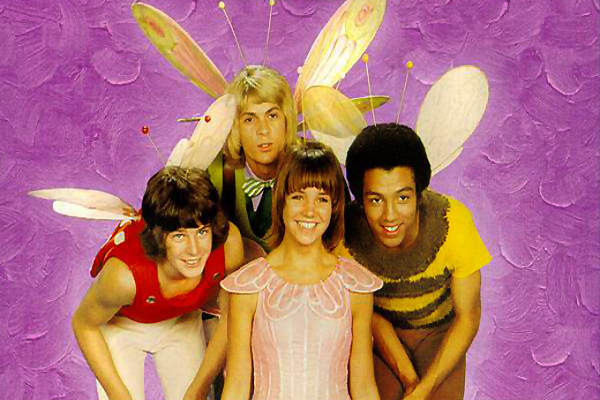
Cheaper to make but just as whimsical, this show starred four teens who resembled different bugs. The insect band were known as The Bugaloos. Singer Phil Collins auditioned for the role of IQ, a grasshopper, but that role went to John McIndoe. The other “bugs” were Joy (Caroline Ellis) who resembled a butterfly, Harmony (Wayne Laryea) who was a bumblebee and Courage (John Philpott) who played a ladybug. Billy Barty played Sparky the Firefly, but unlike the Bugaloos, Sparky appeared in a full-on costume.
This band of bugs made beautiful music together in Tranquility Forest. When not flying, they would take their Bugaloo Buggy, a car created by George Barris, known for creating the first Batmobile among other TV and movie cars.
The Bugaloo’s music would get played on KOOK radio in Rock City by D.J. Peter Platter. Often their songs played out like a music video within the storyline. But they were not the only ones wanting to get their music played on the air.
Benita Bizarre (Martha Raye), the villain of the show, wasn’t much competition. Living in a jukebox with her henchmen Woofer and Tweeter, Benita was always jealous of the Bugaloos’ tunes. Every episode she tried to either capture them or sabotage them only to have her evil plans backfire on her in the end.

Lidsville (1971)
The third show, Lidsville, had a storyline that was suspiciously similar to an animated British series called Hattytown Tales. Both took place in towns where the residents were a bunch of walking, talking hats. But the similarities ended there.
The ABC show starred a teenage Butch Patrick who is better known for playing Eddie in The Munsters.
Mark (Patrick) loved magic shows. While visiting a theme park, Mark went to see Merlo the Magician’s magic show and was so impressed that after the show, he went to the magician’s dressing room to meet him and found Merlo’s magic hat. It suddenly grew to monster size and Mark accidentally fell in, much like Alice did on her way to Wonderland.
Just past the “hair forest” and “shampoo river” he wandered into the town of Lidsville. Not only were the people shaped like hats, but so were their domiciles too. The largest structure was a magic hat where Horatio J. HooDoo (Charles Nelson Reilly) lived. He was basically the king of the land and was constantly taxing those poor hat people.
Thinking that Mark was a spy, a band of bad hats captured Mark and took him to Horatio. Inside magician’s house, Mark met the Weenie Genie (Billie Hayes) who was a servant as long as he had her magic ring. Mark stole the ring, which not made Genie his own and the two ran back into town where he was befriended by a wide variety of hats. Like Jimmy’s quest to leave Pufnstuf’s land, Mark wanted to go home too. And like Witchiepoo, Horatio would always find a way to ruin Mark’s plans.
Although he has admitted many years later that Lidsville was actually a “cute show,” Butch Patrick actually hated working on it. He had a crush on Caroline Ellis from The Bugaloos and had mistakenly hoped that she might be involved in Lidsville in some way. She wasn’t.
It has also been reported that Charles Nelson Reilly enjoyed playing the villain but hated the amount of time it took to get his makeup on. He also said that he felt like he was suffocating while wearing it.
Both actors couldn’t wait for the show to end. Hayes however, loved her time playing a “good” character instead of the baddie Witchiepoo.
Sigmund and the Sea Monsters (1973 and 2016)
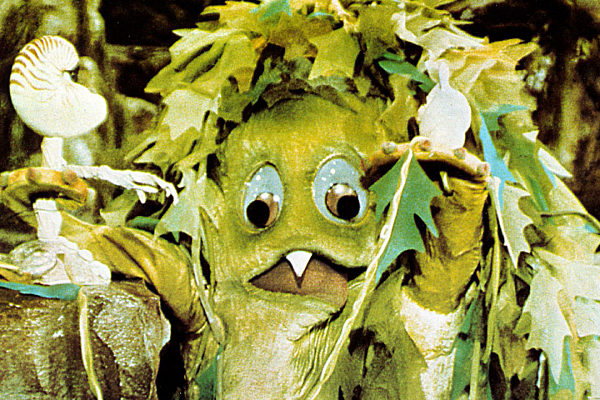
Sigmund and the Sea Monsters was unlike the three shows that preceded it since instead of having a human go to some fantastic world, here, fantastic creatures came into our world. Sigmund involved fantastical creatures coming to the real world.
The trouble started when two brothers, Johnny (Johnny Whitaker from Family Affair) and Scott (Scott Kolden from Me and the Chimp) were playing on the beach near Dead Man’s Point (which doesn’t seem like a great idea) where they met Sigmond Ooze, a friendly sea monster. Sigmund (played by Billy Barty but voiced by Walker Edminston) had been thrown out of his home.
Sigmund’s family (Sweet Mama, Big Daddy, siblings Blurp and Slurp as well as the pet lobster Prince) threw him out because he lacked the skills of scaring humans. Having pity on Sigmund, the boys then snuck Sigmond into their garage and allowed him to live there.
The show also featured overbearing housekeeper Zelda (Mary Wickes), next door nosey neighbor Mrs. Eldels (Margaret Hamilton – the witch from The Wizard of Oz!), Sheriff Chuck Bevans (Joe Higgins), Sheldon the Sea Genie (Rip Taylor) and Shelby (Sparky Marcus), Sheldon’s nephew. One episode even featured Jack Wild.

A reboot of the series was created in 2016 and aired on Amazon Prime’s streaming service. The show’s storyline was quite similar but with a few new characters.
During the show’s seven episodes, David Arquette played Captain Barnabus who devoted his life to capturing sea monsters. The boys were staying with their cousin Robyn and her mother Maxine for the summer. Johnny Whitaker even appeared as a special guest star.
The rest of the cast included Mark Povinelli (Sigmund but voiced by Drew Massey), Solomon Stewart, Kyle Harrison Breitkopf, Rebecca Bloom, Eileen O’Connell, Meegan Godfrey, Michael Oosterom, Dan Crespin, Victor Yerrid, Lexi Pearl, and Donna Kimball.
Land of the Lost (1974 and 1991)
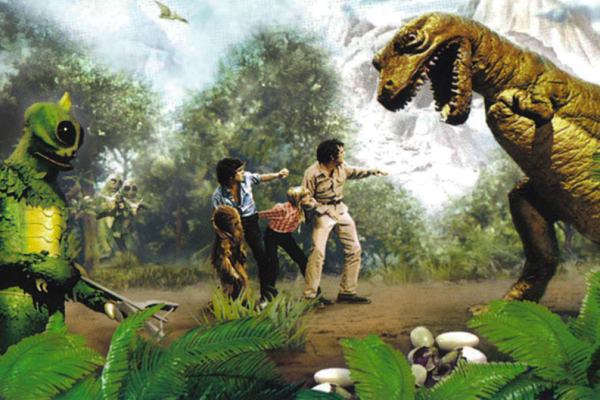
Sid and Marty joined forces with Allan Fosko in the creation of Land of the Lost which is perhaps the most successful of all of the Krofft shows. Rick Marshall (Spencer Milligan) and his children Will (Wesley Eure) and Holly (Kathy Coleman) went on a camping trip and while rafting, fell down a 1,000-foot waterfall.
Grateful that they were still alive, the family found themselves in an alternate universe that was inhabited by dinosaurs. From there, much like other Krofft shows, they spent their time trying to get back home.
Land of the Lost had a different look and feel from their previous shows. The creators didn’t want to talk down to the kids watching the show. Besides running from the dinos, most of the family’s drama had to do with running away from the slow-moving Sleestaks (lizard-looking men) and Pakunis (primate-looking creatures).
The Marshalls were often aided by one Pakuni named Cha-Ka. Sid and Marty went as far as hiring a linguistics professor at UCLA to create a full Pakuni language. As for the Sleestaks, they were not played by professional actors. UCLA basketball players were hired for the roles – but only three since the show only made three Sleestak costumes for the show. Bill Laimbeer, who later played for the Detroit Pistons, played a Sleestak.
The Land of the Lost ran for three seasons, but Will and Holly lost their father at the beginning of season 3 when Rick accidentally returned home without them. He was replaced by his brother Jack (Ron Harper) who apparently was looking for the family at that exact time. (How convenient was that?)
In 1991, the Kroffts introduced a new version of the show that aired on ABC for two seasons. The new show boasted of better special effects and was lighter in tone overall. Though the show had similar themes, it was an entirely different series.

This time, it was the Porter family that got lost. Tom (Timothy Bottoms), Kevin (Robert Gavin) and Annie (Jennifer Drugan) were riding their Jeep when it fell through a time portal. Now “lost” the family met a “jungle girl” Christa (Shannon Day) who used to live in San Francisco before she got “lost” many years earlier. (Originally, the plan was to have that role to be an adult Holly Marshall.)
And then of course there was the 2009 Land of the Lost movie that starred Will Ferrell that was so poorly received that it “won” seven Golden Raspberry Award nominations. At a 2017 Comic-Con appearance, Sid and Marty apologized for the disaster calling it “one of the worst films ever made” and they further explained that they had limited involvement with it.
The Lost Saucer and Far Out Space Nuts (1975)
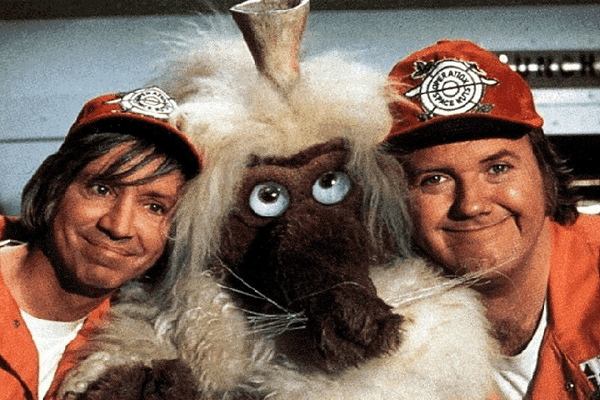
In 1975, Sid and Marty created two similar “lost in space” series that starred two different comedy duos and aired on two different networks. The Lost Saucer (ABC) was mildly more successful. It starred Ruth Buzzi and Jim Neighbors as the androids Fi ad Fum from the year 2369.
In the show’s premiere, the couple land on Earth and invite a young boy, Jerry (Jarrod Johnson) and his babysitter Alice (Alice Playte) to check out their digs in the saucer, but accidentally take off with the kids still inside. Inside the ship they meet the android’s pet Dorse (half dog, half horse).
In each episode, Fi and Fum tried to make their way back to Earth to drop off the kids but instead, they continued ending up somewhere else having yet another adventure, hence, the “lost” saucer. This show was different from other Krofft shows in that each of the 16 episodes had a social or environmental message sewn into the story.
The Far Out Space Nuts (CBS) was sort of like “Gilligan in Space” because the show starred former Gilligan’s Island star Bob Denver who worked alongside Chuck McCann who resembled the Skipper slightly. But the former sitcom was not what the Kroffts were going for. They wanted the show to be a modern take on Laurel and Hardy.
The two played Junior (Denver) and Barney (McCann), two dimwitted NASA maintenance workers who accidentally launch a space craft instead of breaking for lunch. The pair found themselves in different misadventures for 15 episodes aided by their furry friend Honk who spoke using horn noises out of the top of his head.
The Krofft Supershow (1976)

It was the love of serials that drove Sid and Marty to create The Krofft Supershow. The hour-long show featured three 15-minute-long segments from three different continuing stories. Tom Hanks actually auditioned for one of the roles, but he didn’t get it. Such a shame. He could have become something big.
The Krofft Supershow was hosted by a made-up rock group called Kaptain Kool (Michael Lembeck) and the Kongs (Superchick: Debra Clinger, Turkey: Mickey McMeel, Nashville: Louise DuArt and Flatbush: Bert Sommer). The “glam rock” band sang songs written by the Osmond brothers, performed short skits and introduced the serials Dr. Shrinker, Electra Woman and Dyna Girl and Wonderbug.
Dr. Shrinker starred Jay Robinson as the main bad guy and Billy Barty played his little evil helper, Hugo. In the first episode, three teenagers Brad (Ted Eccles), B.J. (Susan Lawrence) and Gordie (Jeff MacKay) find themselves standed on a deserted island where they meet Dr. Shrinker who, in no time at all, shrinks the three down to miniature size. The kids spend the rest of the series trying to escape with no luck.
Electra Woman and Dyna Girl was similar in tone to the campy 1966 Batman TV series. The show featured Lori (Deidre Hall) and Judy (Judy Strangis) who worked as reporters for Newsmaker magazine but also fought crime. With the help of smart guy Frank Heflin (Horman Alden) the duo fought against various supervillains in two-part episodes.
Inspired by Herbie the Love Bug, Wonderbug was a seemingly old and rundown dune buggy named Schlepcar but when when teens Barry (David Levy), C.C. (Jack Baker) and Susan (Carol Anne Sefinger) attach a magic horn to the vehicle, he became Wonderbug who could fly which was really handy when fighting criminals, which happened in every episode.
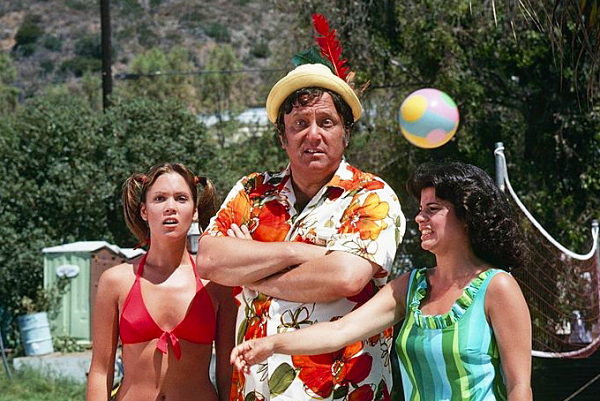
The Krofft Supershow was renewed for a second season but with some changes. First, Kaptain Kool lost one member (Flatbush) and the group was no longer a glam band, but fresh-faced. And their musical performances were actually taped in a studio with actual children in the audience. Wonderbug was the only serialized story to continue on the show and was joined by Magic Mongo and Bigfoot and Wildboy.
In Magic Mongo, three teenagers (Donald: Paul Hinckley, Lorraine: Helaine Lembeck and Kristy: Robin Dearden) had found an old bottle on the beach and unknowingly unleashed a genie (Lennie Weinrib) who tried to help his masters but usually ended up with some misunderstandings and goofy hijinks.
Scary Bigfoot was shown to have a fatherly side in Bigfoot and Wildboy. The show told the tale of Bigfoot (Ray Young) finding the orphaned Wildboy (Joseph Butcher) out in the woods of the Pacific Northwest. Together, the pair would fight off dangerous criminals. Each episode of Bigfoot and Wildboy was shown in two parts. This segment proved popular enough to be shown as a standalone 30-minute show in 1979.
Krofft Superstar Hour (1978)
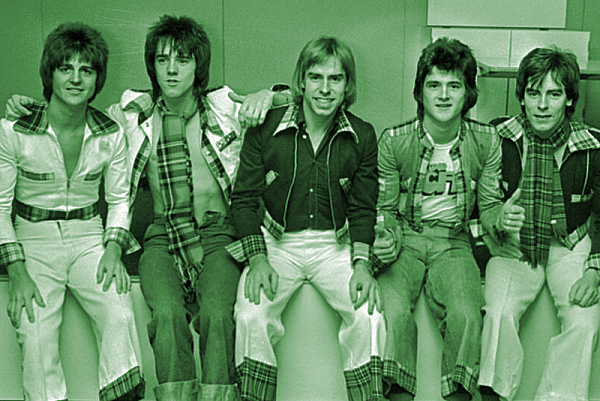
In 1978, the Krofft Supershow got a major reboot by switching to NBC, replacing Kaptain Kool and the Kongs with The Bay City Rollers and the show became a variety show. Short kits were played by famous Krofft characters like Witchiepoo and Pufnstuf and it was all done in front a live audience. Ambitious, but it just didn’t work.
The Kroffts thought the Bay City Rollers would make the show a surefire hit and given the excitement shown from the shots of the live audience, it would appear to be one. However, when the Scottish band wasn’t playing their music, they were not very charismatic. Their thick accents made it difficult to understand what they were saying and it was reported that they were not very professional during practices.
As before, the band would introduce more Magic Mongo episodes and two new miniseries. Horror Hotel was a comedy that starred Witchiepoo (Billie Hayes) running a hotel along with other H.R. Pufunstuf characters Dr. Blinky, Seymour the Spider, Orson the Vulture and Stupid Bat. The show also featured Horatio J. HooDoo from Lidsville but this time he was portrayed by Paul Gale.
The second series, The Lost Island had a similar tone to H.R. Pufunstuf and starred the dragon along with Sigmund the Sea Monster and Weenie the Genie (also Billie Hayes). The villains for this series were Dr. Deathray (Jay Robinson reprising his Dr. Shrinker role) and his henchman Otto (Billy Barty). Oh, and the show featured Sleestaks and dinosaur footage from Land of the Lost.
About two months into the show, the Superstar Hour was cut down to 30 minutes and renamed The Bay City Rollers Show. The Horror Hotel and Magic Mongo segments were dropped as well. Unfortunately, the show didn’t fare any better and by January 1979, the show was dropped from NBC’s lineup.
Pryor’s Place (1984)
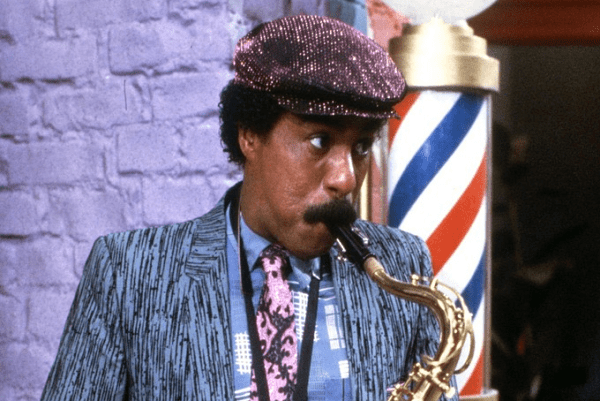
Though Pryor’s Place did incorporate a few puppets for short comedy sketches in the series, this Sid and Marty show was unlike anything that have had done previously. It wasn’t wacky or silly, but actually heart-felt.
At first, it would seem that comedian Richard Pryor was an odd choice to host his own children’s show given his history of adult humor, but he did a fine job with this underappreciated series. Pryor hosted the show, played many of the characters and told stories that were supposedly from his own childhood.
Everything from the theme song (sung by Ray Parker Jr.) to Pryor’s delivery, was gentle. Sort of a blend of Sesame Street and Mister Roger’s Neighborhood set in the inner city.
13 episodes were produced (that only aired once) which starred Akili Prince as “Little Richie” discussing topics like bullying, first crushes, shoplifting, friendship, divorce and more. The show also featured a long list of special guests including Kareem Addul-Jabbar, Kim Fields, Willy Nelson, John Ritter, Lily Tomlin and Robin Williams.
Mutt & Stuff (2015)
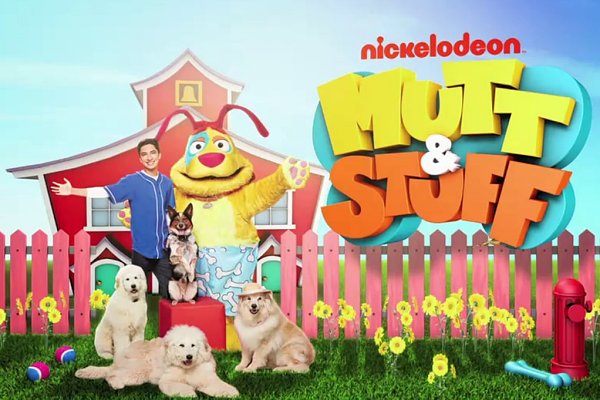
Sid & Marty’s next project was unique, inventive and in some ways, a return to form. Cesar Millan (“The Dog Whisperer”) produced Mutt & Stuff that starred his son, Calvin Millan as the teenage owner of a school for dogs (Cesar played his father in some episodes.)
This Nick Jr. preschool series also starred Stuff, a larger-than-life dog puppet. In one episode, Pufnstuf visits Stuff and it turns out – he’s his uncle even though he’s a dragon. Be that as it may, it’s only fitting that this last entry included a guest appearance by the Krofft’s original star. For the visit, Pufnstuf brought along Jimmy’s talking flute as well as Cling and Clang, two members of the mayor’s rescue crew from Living Island.
The show also featured other puppet characters including Noodles (a mouse), Melvin (a talking fire hydrant), Zoe & Davenport (two cats) and Marty & Sid, two talking trees named after the show’s creators. 73 episodes were produced for Mutt & Stuff, the most of any of the Krofft’s shows.
This is the full list of children’s shows that the Krofft brothers worked on over the years, but the pair also produced a number of shows and specials for adults too including Donny & Marie, The Brady Bunch Hour and Barbra Mandrell & the Mandrell Sisters.
Main Images: TVDB


Leave a reply to This Day in Pop Culture for September 9 – Writer of Pop Culture Cancel reply