

Not all Christians are hypocrites. Not all Muslims are terrorists. Not all priests are untrustworthy. But that is often what you see on your TV screen or in the movie theater. However, thanks to a new global entertainment study, how you see yourself or others just might change.
From July 26 to August 22, 2023, HarrisX in partnership with the non-profit, the Faith & Media Initiative, conducted the Global Faith and Entertainment Study. The study surveyed just under 10,000 people across 11 countries asking for their views on how religious people are portrayed on film. What they found is what we’ve been trying to tell Hollywood for years.
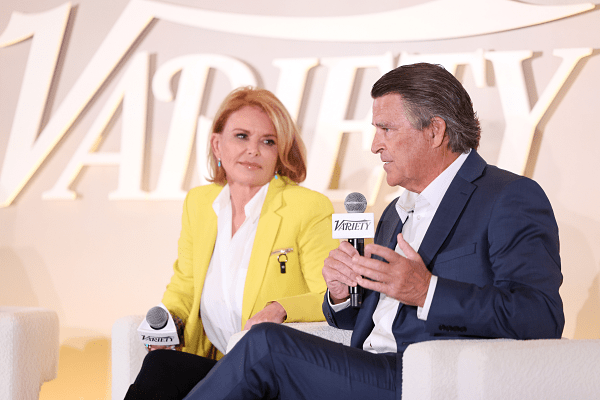
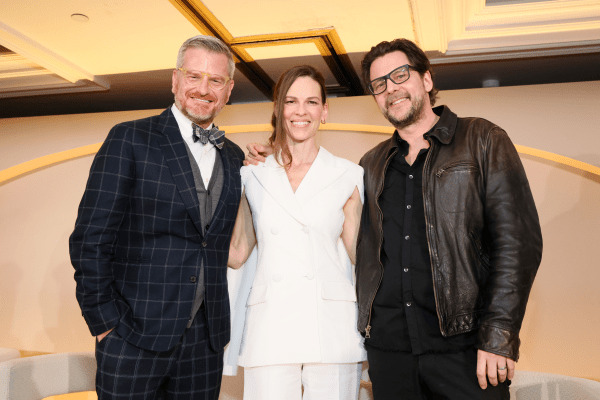
According to their website, the Faith & Media Initiative is a nonprofit dedicated to ensuring more accurate, balanced representation of all faiths in entertainment and news. The non-profit released their findings earlier today a Spirituality & Faith Entertainment Breakfast given by Variety. Those in attendance at the Los Angeles event included Hilary Swank (who stars in the upcoming faith-based movie Ordinary Angels) and Roma Downey (who stars in the upcoming “hope opera”, The Baxters on Prime Video) and Rainn Wilson from The Office.
In the first-of-its-kind global study, HarrisX found that the majority of global audiences believe that the entertainment industry needs to improve their portrayals of faith and religion and make those portrayals more accurate.
According to the Study:
- 80% of global audiences say it is important for the entertainment industry to improve their portrayals of faith and make them more accurate.
- 63% of audiences globally say entertainment frequently perpetuates stereotypes about religion, is the least represented and most sensationalized identity.
- 69% of Americans polled felt that movie and TV studios perpetuated stereotypes while 31% felt that they accurately portrayed people of faith.
- 68% of global viewers say it is important to have diverse religious perspectives in TV and movies.
- 61% of global consumers think TV and movies can foster dialogue between people of different beliefs.
- 59% of global consumers report learning something new about another religion from a movie or TV show.
- Those living in Japan watch the most TV (69%) while those living in Brazil watch the least (37%)
The study also showed that what people see and what they want to see are two different things.
| THEMES MOST PRESENT IN TV AND MOVIES | THEMES MOST DESIRED FROM AUDIENCES |
|---|---|
| 1. Family | 1. Friendship |
| 2. Friendship | 2. Nature |
| 3. Conflict | 3. Family |
| 4. Power | 4. Inspiration |
| 5. Nature | 5. Environment |
| 6. The Supernatural | 6. FAITH AND RELIGION |
| 7. War | 7. Morality |
| 8. Inspiration | 8. Tradition |
| 9. Tradition | 9. The Supernatural |
| 10. Morality | 10. Spirituality |
| 11. Politics | 11. The Afterlife |
| 12. Environment | 12. Politics |
| 13. FAITH AND RELIGION | 13. Power |
| 14. Work | 14. War |
| 15. Spirituality | 15. Redemption |
| 16. The Afterlife | 16. Conflict |
| 17. Redemption | 17. Work |
| 18. Ritual | 18. Ritual |
“Good storytelling in TV and movies has historically educated, inspired and led to positive change in business and society,” said Dritan Nesho, CEO of HarrisX. “The data shows clearly that addressing the concerns of audiences around the world about the lack of range, diversity, representation, depth, and accuracy when it comes to portrayals of viewers own religion, faith and spirituality – and that of other faiths they interact with – is both good business and leads to positive impact,” said Dritan Nesho, CEO of HarrisX. “Today entertainment is increasingly on demand and democratized therefore the needs of these massive swaths of consumers should not be ignored.”
As part of the survey, the respondents identified three potential ways for the entertainment industry to generate change. Those were…
- Write more diverse characters and storylines
- Hire writers and other talent who share the same religion as characters to ensure accurate portrayals
- Hire experts to help with religious portrayals

Of the 9,945 Online Interviews:
- The gender breakdown was an even split of 50% male and female respondents.
- The age breakdown was pretty much evenly split as well. They polled those 18 and up.
- The majority of respondents came from the U.S. but many others were represented as well from Canada, Mexico, Brazil, Italy, Germany, U.K., Turkey, India, Japan and Nigeria.
- 4,827 of the respondents identified as Christian, 1.360 were Muslim, 992 were Hindu, 305 were Buddhist, 116 were Jewish and 360 listed their beliefs as “other”. The remainder of those polled identified as Atheist (314) or Agnostic (192) and 1,479 claimed to have no religion at all. An additional 30+ in-depth interviews were given with directors, producers writers, actors and studio executives.
Main Image: Mateus Rosa Flor from Pixabay

Leave a comment