

Who knew that a scrawny tree in a Peanuts Christmas special could make such an impact? A Charlie Brown Christmas is synonymous with the holiday. It has been that way ever since December 9, 1965, when it aired on TV for the first time.
The cartoon has been so popular that two more were made (It’s Christmastime Again, Charlie Brown in 1992, Charlie Brown’s Christmas Tales in 2002 and I Want a Dog for Christmas, Charlie Brown in 2003) which are cute, but neither hold the emotional weight of the original. It’s timeless.
Like me, this animated TV special is celebrating 60 years this year. I can’t remember a single Christmas season in my life that was celebrated without rewatching this classic tale. And during the early years, if you missed it, you had to wait an entire year to try again.
(I’ve already watched A Charlie Brown Christmas on Apple TV this year, and you can watch it too this Saturday and Sunday, December 13 and 14, 2025.)
What makes this special so…special? Here’s a brief history, some trivia and a few personal insights.
It was the First Peanuts Special Ever
To date, 45 TV Peanuts specials have been produced. We wouldn’t have any of them if Charles Schulz didn’t get this first one right. Up until 1965, the Peanuts characters were primarily seen on the funny pages of the local newspaper. However, animated versions of the characters had been shown on TV during commercials for the Ford Motor Company from 1959 to 1962.
In 1963, documentarian Lee Mendelson created A Man Named Mays, a documentary about Willie Mays who he considered to be one of the best baseball players there ever was. The following year he produced another documentary for one of the worst baseball players: Charlie Brown.
The short film was meant to be shown on TV. It contained a couple of minutes of animation created by animator Bill Melendez and the music was provided by Vince Guaraldi including the song, “Linus and Lucy”.
Sadly, A Boy Named Charlie Brown failed to find a sponsor. But that failed project eventually led the way to Schulz’s most important project ever. As it turns out, just two years later, Coca-Cola was looking for a TV special to sponsor. Mendelson had already had a winning team put together.
The Charlie Browniest of TV Specials
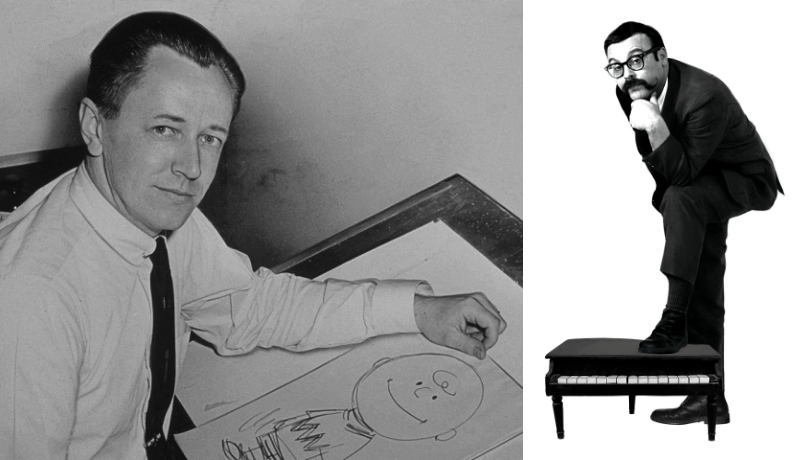
Much like how Snow White and the Seven Dwarfs was considered “Disney’s Folly” while Walt was making the future hit movie, fingers began pointing at Charles Schulz.
A television reporter for The New York Times wrote: “Television is running a big gamble,” said Val Adams. “It will attempt a half-hour animated cartoon in color based on the newspaper comic strip ‘Peanuts.’ In lifting ‘Peanuts’ characters from the printed page and infusing them with motion and audibility, television is tampering with the imaginations of millions of comic strip fans both well and self-conditioned on how Charlie Brown, Lucy and others should act and talk.”
But that wasn’t all. A typical animated TV special made in the mid 1960’s would usually take anywhere from several months to a few years to produce. Mendelson was given just six months to finish the task. With 13,000 different drawings (a dozen frames per second), it wasn’t completed until 10 days before it was going to air on CBS.
Although Mendelson suggested it, the Peanuts Christmas special does not contain a laugh track even though it was a staple on television programming during that time. Schulz was adamant that audiences did not need to be prompted on when to laugh. He was right. Today we sort of frown on that sort of logic.
Why ‘A Charlie Brown Christmas’ is Different: The Voices

Melendez went looking for “non-actors” instead of “Hollywood kids” to recite the characters’ lines. This special became the first to use actual children to voice animated characters. He went as far as sending home tape recorders with some of his employees to record their own children as an audition.
“When we first started doing the commercial Peanuts characters, some of the advertising people thought we should use adults imitating children, but that didn’t work at all,” said Schulz during an interview with NPR in 1995.
“And then we had to decide whether Snoopy should talk, because he doesn’t really talk, he just thinks in the comic strip. So, I insisted that we didn’t try to give Snoopy a voice.”
Snoopy doesn’t actually talk, but he does speak. Melendez is to thank for that. He used his own voice for the pup. It’s iconic and his recordings are still used today for the character.
All of the dialogue recordings were completed in one day. Here’s a fun fact: The music group Jefferson Airplane were recording next door and came over to get autographs from the kids. (Not until ABC’s 2015 broadcast of the special did Peter Robbins (Charlie Brown), Christopher Shea (Linus) and Tracy Stratford (Lucy) receive credit for their work.)
Why ‘A Charlie Brown Christmas’ is Different: The Message
Despite the concerns of CBS as well as Mendelson and Melendez, Schulz would not back down on using a minute or two of biblical content. Mentions of the Bible were rare in those days. CBS was afraid that showing Linus sharing the King James version of the nativity story would be too controversial. But Schulz said, “If we don’t do it, who will?” A good point.
Why ‘A Charlie Brown Christmas’ is Different: The Music
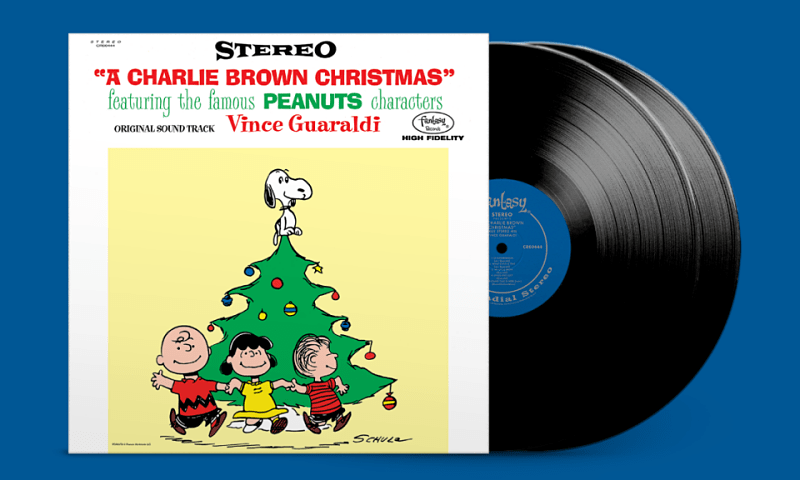
When creating music for a children’s show, Jazz music isn’t what usually comes to mind. Mendelson and Schulz chose to go with Guaraldi again, who reused the song, “Linus and Lucy” from the previous unaired documentary. There is nothing “Christmasy” about “Linus and Lucy”, but it fits in any Christmas music playlist just fine. It is a favorite of many. When I hear that song today, I’m instantly transported to my childhood. The Peanuts theme song is even my ring tone on my phone.
Guaraldi also wrote the music for the songs “Skating” and “Christmas Time is Here”. The lyrics for the latter were written by Mendelson on the back of an envelope in about 15 minutes!
The songs that featured singers were sung by a choir of children from St. Paul’s Episcopal Church whose director wanted nothing less than perfection. Mendelson and Guaraldi chose a slightly off-key recording for the special. Like the film’s dialogue, they wanted the kids to sound like kids, not professionals.
This music is iconic. The Vince Guaraldi Trio soundtrack was inducted into the Grammy Hall of Fame in 2007 and added to the Library of Congress’s National Recording Registry in 2012.
And Then There was Snoopy

Snoopy has always been the most popular character of the Peanuts comic strip, but presenting him on the screen proved to be a bit of a challenge for Schulz. He wanted to include him in the special of course, but he didn’t want the beagle to take over.
For instance, when it came to Snoopy’s scene where he dances on top of Schroeder’s piano, Schulz was afraid that it would detract too much from the plot. And then there’s the scene where the dog is outwardly mocking Lucy mimicking her mannerisms while she is scolding the play crew. Even today I can’t watch that scene without laughing. Snoopy is just awesome, and he doesn’t take anything away from the story.
How the Charlie Brown “Failure” Surprised Many
When all was said and done, literally, Melendez was not happy with the final version of the special. At least not at first. During a showing of the special to a group of animators a few days before the CBS premiere, he remarked, “My golly, we’ve killed it”.
CBS was equally displeased. After viewing the special days before it would air, they thought that the pacing was too slow, the jazz music was out of place, the animation style was too simplified, and it was too religious. In short, it was too different from what they were expecting. They just didn’t get it.
But it was too late. It was a done deal. And boy did they all get a surprise the next day. Val Adams may not have been impressed with the final product, but it was praised by many others. The Hollywood Reporter called A Charlie Brown Christmas, “Delightfully novel and amusing.” Weekly Variety thought it was “Fascinating and haunting.”
For those concerned that the Peanuts characters would not do well on the TV screen, the New York Post said that the special made a “very neat transition from the comic page to screen” and “Natural-born loser Charlie Brown finally turned up a real winner last night.” said The Washington Post.
Was the Linus nativity speech too much? Not according to the New York World-Telegram. They said, “Linus’ reading of the story of the nativity was, quite simply, the dramatic highlight of the season.”
A Charlie Brown Christmas was watched by 45% of the viewing audience watching TV that night. That comes to over 15 million homes. It came in second place behind NBC’s airing of Bonanza. That was music to CBS’ ears. After the special was deemed a hit, CBS gave Chuck Jones a budget of $315,000 (three times what was set aside for Charlie Brown) to create the now iconic How the Grinch Stole Christmas TV special.
In 1966, A Charlie Brown Christmas won an Emmy for Outstanding Children’s Program and a Peabody Award for excellence in broadcasting. Today, the special has an 86% review score on Rotten Tomatoes.
After the initial airing, the fad of aluminum Christmas trees was over. By 1967, they were no longer being regularly manufactured. Today, you can even buy imperfect “Charlie Brown Christmas trees” at many local department stores.
An Enduring Legacy of a Silly Cartoon
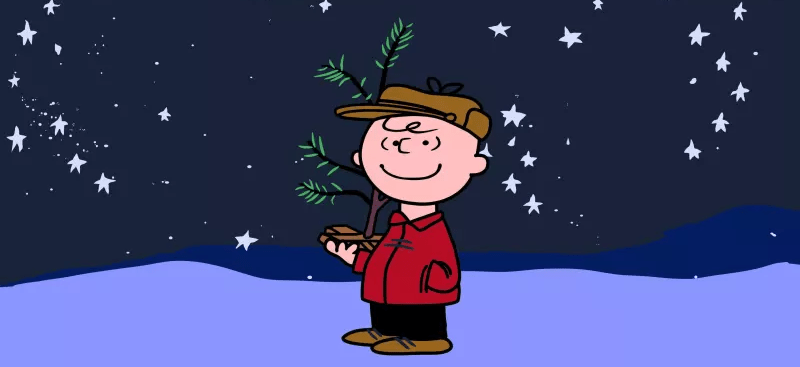
Did Charlie Brown change the world? Maybe not, but he changed mine. After years of enjoying the many different holiday specials myself, I’ve had the pleasure of sharing these favorite tales with my own children when they were young. Watching my kids laugh at Snoopy’s antics over the years has been truly heartwarming. And the added Bible lesson built in the Christmas story has helped to guide our family to focus on what is most important during the holiday.
Like that goofy dog trying to win the first prize for the house decorating contest, or Sally telling Santa that she would be happy to get tens and twenties because all she wants is what’s coming to her, sometimes it’s best to slow down and just focus on that little simple tree.
(Main Image: Apple TV)

Leave a comment