

From New Coke to Crystal Pepsi and from Clippy the Paperclip to Quibi, these products seemed like good ideas at the time. They were wrong.

1. McDLT
Competing with Burger King’s Whopper has been a consistent challenge for McDonald’s. In 1984, they came up with a clever concept – the McDLT. The burger was fairly standard. The “LT” stood for lettuce and tomato, which was new for McDonald’s. But what set this burger apart was how it was packaged.
The McDLT burger came in a two-sided polystyrene container where the hot items were on one side and the cold items on the other. The tagline for the product was “The hot stays hot, the cool stays cool.” That is until the burger eater merged together both halves.
The burger was popular at first, but it was discontinued in 1991 as both consumers and McDonald’s wanted to move away from non-recyclable polystyrene.

2. Whopperrito
This seems more like what you do when your restaurant runs out of hamburger buns. In 2016, Burger King tested out the Whopperrito which was essentially a Whopper with queso sauce (but minus ketchup, mustard and mayo) stuffed in a burrito. While it had its share of fans, overall, it didn’t sell well and disappeared from menu boards three months later.
This seems like the equivalent to a taco pizza – pick one or the other, but not both.

3. Quibi
In 2018, Jeffrey Katzenberg unveiled NewTV, a short-form streaming service where episodes of new TV shows would be cut down to 10-minute bite-size episodes. It was later renamed Quibi which was mash up of the words “quick” and “bites”.
The audience that Quibi aimed for were those who needed to be entertained at all times like people who rode the bus to school or work and those who had to wait for their laundry to be dry.
Quibi was launched on April 6, 2020 with a slate of lackluster shows. It wasn’t a hit which Katzenberg blamed on the Covid-19 pandemic. And he had a point as many people were not able to leave their homes during that time, so they had plenty of time to watch long-form TV. Whatever the reason, Quibi’s service was shut down on October 21, 2020, just six months after it launched. Ouch.

4. New Coke
After a long and successful run with its original formula, Coca-Cola decided to create “the new taste of Cola-Cola” with “New Coke” in 1985. It did not go well.
Though some Coca-Cola loyalists were just fine with the change, others did not agree. Coke received over 40,000 calls and letters criticizing the company’s decision. Three months after its rollout, the red cans came back on the shelves re-branded as “Coca Cola Classic.”
Many have speculated that the change in formula was just a big marketing stunt, but Coke has always maintained that the “new” Coke was just an attempt to replace the original product to compete better in the marketplace. Blind taste tests suggested the people preferred the sweeter taste of Pepsi. Guess they were wrong.
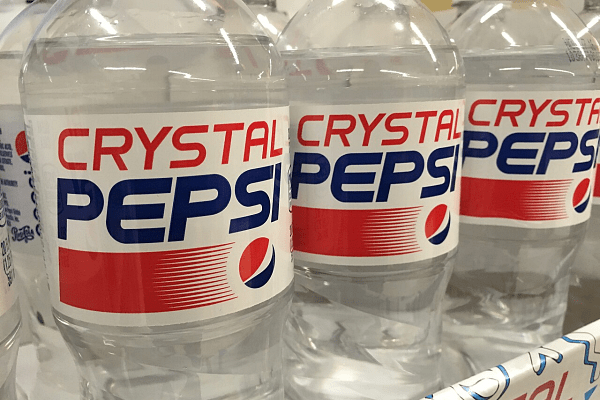
5. Crystal Pepsi
In the early 1990’s, “clear” products were all the rage at the time including liquid soaps, mouthwash and even beer. In its never-ending quest to steal sales away from Coca-Cola, Pepsi created Crystal Pepsi. It was essentially the same soda minus the caramel color, caffeine and 20 calories. Pepsi bragged that it was lighter in flavor too. Their slogan was “You’ve never seen a taste like this.”
After a successful market run, consumers began asking for a diet version. Crystal Pepsi and Diet Crystal Pepsi found their way on store shelves nationwide in December 1992.
To counteract Crystal Pepsi’s popularity, Coca-Cola launched Tab Clear. Legend has it that Coke knowingly released the beverage using their own underperforming product as a way to “kill” both products at the same time. By the end of 1993, clear beverage fad was over.
6. Google+
Google has made many successful products over the years, but they’ve never really landed with a solid social media presence. In June of 2011, the company released Google+. Rather than just another “Facebook”, Google+ encouraged users to join various “Circles” community groups which included multi-person instant messaging and video chat “Hangouts”. Later, Google+ was incorporated into other Google products.
Initially, Google+ had many users, but these users didn’t use the platform very long and they went back to sites like Facebook. The site went through a redesign in 2015 but it wasn’t enough. Google pulled the plug on April 2, 2019 avoiding ending the service on the 1st as it could have been received as an April Fool’s Joke.

7. Juicero Press
People love juicing, but preparing the fruits and vegetables ahead of time, not to mention the cleanup, can be a struggle. In 2016, Juicero offered a solution which sounded great … for rich people.
The Juicero Press was a cold-press juicing machine which was originally priced at $699. Users were also required to purchase Juicerio-branded produce packs which ran between $5 and $7. Oh, and the produce packs had a shelf life of just eight days.
When consumers discovered that they could simply squeeze the produce packs with their bare hands, they got nearly identical results than when made with the juicer. Even when the company knocked down the price of the juicer to $399, people refused to buy it. Juicero stopped selling juicers in September 2017.

8. Keurig Kold
Almost overnight, Keurig changed how people made and drank coffee in 1998. In September 2015, the company hoped to strike gold again with cold soda beverages. The Keurig Kold machine allowed consumers to make their own Coca-Cola, as well as iced teas and flavored waters in their home.
Keurig Kold was like SodaStream, but it didn’t require a CO2 canister – just tap water. Most customers appreciated that it was simple to use and that they offered a large variety of flavors to choose from. But the machine was spendy ($369) and the drink pods retailed for about $5 for a pack of four. And while the machine was easy to use, it wasn’t easy to clean. Keurig gave up on the product in October 2016.

9. Clippy the Paperclip
When Microsoft Office 97 was launched, it came with special “Office Assistants” like The Dot (a smiley-faced red ball), The Genius (a cartoon version of Albert Einstein), Hoverbot (a robot) and others. But the most controversial was the talking paperclip, Clippit, aka Clippy.
Clippy was meant to be a source of help for users offering advice and assisstance on how to use Office more effectively. For instance, you may have wanted to write a letter and Clippy would pop up saying, “It looks like you’re writing a letter. Would you like help?”
People thought Clippy was cute at first, but when he kept popping up offering unwanted advice, much like their Aunt Bertha, he became annoying.
Clippy and the other Office Assistants were not invited to take part in the Microsoft Office 2007 release.
10. Lay’s Wow Chips
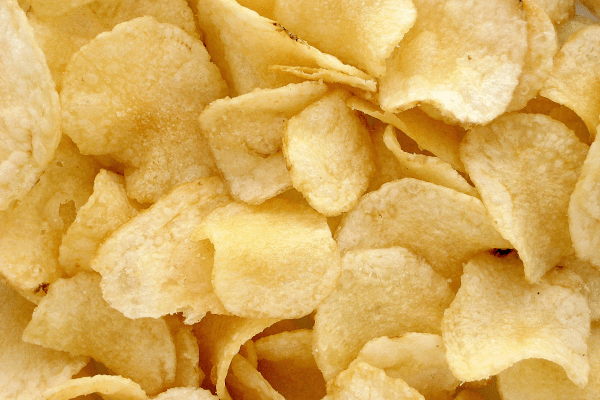
Wow is right. In 1998, Frito-Lay began selling potato chips that were fat-free. Too good to be true? They were. Oh, sure, they were a hit at first before people really understood just what they were eating.
The chips were made with Olestra, a fat substitute food additive. Olestra promised much but instead delivered stomach cramps. Frito-Lay was one of the first companies to try out the product which had been required to post a warning label that read, “This Product Contains Olestra. Olestra may cause abdominal cramping and loose stools. Olestra inhibits the absorption of some vitamins and other nutrients. Vitamins A, D, E, and K have been added.”
Frito-Lay continued to sell the chips, changing the name to “Light” but you know the saying, “Fool me once…” Wow Chips were discontinued in 2016.
Main Images: Wikimedia, Deviant Art, Flickr

Leave a comment