

It is estimated that the very first podcast was created in 2003. Today, estimates show that there are about three million podcast available to stream right now and are available in as many as 100 languages. Topics range from true crime to self-help and politics to sports. One topic that isn’t covered much is that of horror movies and those of the faith that watch them, but believe it or not, they are out there. And it might surprise you to learn that one has even been produced by Christianity Today and Fuller Seminary.
Be Afraid (not to be confused with the Be Afraid Horror Podcast) is hosted by Dr. Kutter Callaway. He isn’t what you would call a rabid fan of horror, but he has grown an appreciation of such films over the years. Callaway holds two PhDs (one in theology and one in psychological science) from Fuller Seminary and often speaks on the topic of theology and culture. The theologian has written and co-written a number of books on the topics of marriage, psychology and counseling, atheism, music, TV and even books for children, but this deep dive into scary films is fairly new to him.
During each episode of Be Afraid, Callaway tackles the horror genre of filmmaking. With interviews with filmmakers and theologians, Kutter discusses the pros and cons of watching spooky movies including as to whether or not Christians should be consuming such fare. For some, a knee-jerk reaction is “Absolutely not!” and for them, it is probably best that they should abstain from the creepy fare. But for the rest of us, what value do horror movies provide for Christians?
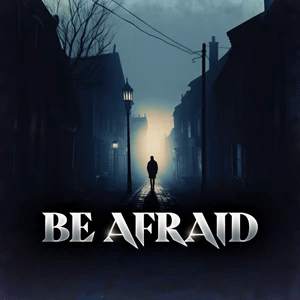
Dr. Callaway graciously gave up some time to speak with me about the podcast which I highly recommend. I began our conversation with my observation that I thought it was ironic that someone name Kutter would be speaking about slasher films, something he said never occurred to him before doing this whole horror thing. For most of his life, he hadn’t been into horror as it just messed with him, so he avoided it for most of his career. So, how did he get involved in creating this podcast? He says, it was a mixture of things.
“One is that I’m here in Greater LA and so, if you throw a rock, you’ll hit 10 people in the industry. As it happened, I have developed relationships with people that were working in and around horror.”
The second had to do with Covid. He says that during that time, horror was being created and watched more than ever.
“This was sort of cultural phenomenon, says Kutter. “I call myself a student of culture and society and I’m a researcher of that. I’ve researched contemporary culture, and here’s this thing blowing up. What’s up with that? I can’t keep my researcher credibility without, you know, kind of looking at this at least.”
As for the third thing, a seminary teacher at Fuller approached Callaway on creating a devotional, and wouldn’t you know it, this guy had actually made a short horror film himself.
“We started thinking through some of the more horrific portions of scripture and wondered, what if we did a devotional that was riffing on sort of the horror genre and what people do? So, I was like, that’s really interesting. Let’s do that. So those things all weaving together, and a podcast came out of it.”
You would think that Christianity Today might not be on board with such a topic, but that wasn’t the case.
“We were in conversations with [CT] about doing something using TV and film. We had a few different iterations that we went through, sort of genre by genre. And so, as we went through different genres, it just happened that the first script I wrote was a sample on horror. Eric Petrik, the chief creative officer at CT, looked at that and said, ‘This should be a whole podcast.’ So, it’s actually CT’s fault that it became an entire season and not just one episode of a different podcast,” jokes Callaway.
“I know that it takes the entire season of episodes to answer this question, but should Christians be watching more horror?” I ask Kutter.
“The answer isn’t necessarily yes. A big part of the series is more about asking the questions I think all Christians should ask: What is God up to in the world and how might we participate? There’s a certain phenomenon out there, things that people are consuming, things that people are finding to be interesting, and I think it reflects some sort of longing. If followed long enough, it ultimately leads you back to the longing of all longings, right? The origin of all of our desire and longing. Sometimes that’s in the form of an absence. Sometimes it’s in the form of something else. Take horror for example. The question a Christian should ask is not so much, ‘Should I watch more horror?’, but rather, ‘What does horror tell me about my neighbor?’ ‘What does it tell me about myself?’ ‘What does it tell me about the ways I might love, interact and speak with people who may be going through some stuff?’”
However, Kutter does say that he does think that some people should watch a little more horror or at least, give it a chance.
“I mentioned before that I was personally kind of disturbed by horror. And one of the questions I was asking along the way was, why do some people just seem to enjoy it? It doesn’t bother them at all, but instead, it brings them to light and pleasure. And these are both Christians and non-Christians – you know, across the board – and there’s others like me, who’s just can’t handle it. So, I kind of had it in mind when we started the podcast that the thesis was going be something like, “perfect love drives out fear”. That’s actually the goal. The objective is not to be afraid, but actually, we’ll find something that will help us overcome and eliminate our fears. And that would be the journey that I would go on.”
But as this show progressed, he realized that it is healthy in some ways (in a qualified sense), for any of us to name and acknowledge how driven by fear we are in many different areas of life. He says that the problem isn’t necessarily that we’re afraid of some things, it’s that we are often afraid of the wrong things, and he explains that we all need to learn how to “train our fears rightly.”
“Isn’t it interesting that the beginning of fearing the Lord is the beginning of wisdom? Okay, well, what would it look like to genuinely fear God, if that was what we want to do, instead of fearing all of these other things, and steer our fear in that direction? You could potentially do it elsewhere, but I do think certain horror fiction can actually help us to fear rightly in that biblical sense.”
The topic of finding the value of horror movies doesn’t come up often in our church circles and Kutter says that he was not immune to that. He tells me that he grew up in what he calls an “anti-culture Christian environment” where anything out there in the “secular world’” is not good, is misleading or destructive.
“And so, we created this Christian subculture as a replacement or an alternative to these other things, says Kutter. “I’ve always found it interesting that (and this actually comes up in the podcast too at certain places) the horror genre would be like the epitome of what you would avoid. Any Hollywood movie should be treated with some suspicion, but horror movies just celebrate the worst of the worst. But then I was also indoctrinated in some ways by what is essentially Christian horror.”
He’s referring to such Christian “classics” (and I use the term loosely) where low budget films like A Thief in the Night or The Prodigal Planet tried to share the “good news” by scaring the pants off you.
“I mean, there are these films I remember seeing that were basically trying to scare you straight or scare you out of hell by using all of the tropes of horror. Some people would say [watching horror] opens you up to spiritual darkness or other things. As we explore in the podcast, we ask, ‘What’s the difference then between the kinds of horror we do allow and the kinds that we don’t?’”
While listening to all ten episodes of Be Afraid, I found it surprising by just how many film directors who create horror movies consider themselves to be people of faith. But Kutter states that some of the films that they make are “explicitly religious and sometimes explicitly Christian.” For instance, while I personally have no desire to watch The Exorcist, Kutter says that it is profoundly Christian story.
“It’s disturbing on all sorts of levels, but the story itself is a story of self-sacrifice, of redemption, of good overcoming evil, of not just good, but the Christian God overcoming Satanic forces. A lot of the filmmakers that I have talked to that are Christians say that they appreciate horror because they are able to name evil as evil.”
That isn’t the case in other genres. Kutter points out films that feature anti-heroes where it gets really difficult to say who’s good and who’s not.
“If you watch John Wick, he’s a murderer, like an assassin, right? And he assassinates a bunch of other assassins, and at the end you’re cheering, basically for an assassin, who is good in that sort of world, right? It’s really hard to say. But in horror, you have clearly delineated roles that some filmmakers find really helpful. And I think that might be another reason why Christians are drawn to it, because it helps in that sort of storytelling.”
During our conversation, I tell Callaway that I only really enjoy horror movies where people survive in the end, not the ones where people die for whatever reason. I’m also not into films that deal with demonic characters. So, I ask him if there are any movies that Christians really should shy away from.
“It’s really hard to say, but as with any genre, I recommend discernment – knowing yourself and having a community that can help you answer the question. For me as an example, it’s sometimes hard because I do research, teach and write on it. And so, my excuse is always like, ‘Well, it’s research. I have to.’ But I need someone in my life (and it’s my wife) to tell me, ‘No, you’re just giving into your base instincts. You don’t need to watch that. That’s no good.’ When she calls it out to me, I’m like, ‘yeah, okay. I need to not go there.’”
He continues, “In general, I tend to stay away from any movie when the stuff that’s going on in the movie (the difficult, dark, scary, violent, whatever) no longer serves the purpose of the story or just simply is there for the sake of being there. It just isn’t worth my time more than anything else. What’s interesting is that it’s also really bad art. So, even before you get to the Christian critique, you can just be like, this is not worth anyone’s time, much less a Christian’s time. And we have online stuff enough now that gives us all the content that we need to know. So, trust your instincts and, you’ll know when you should probably avoid it.”
So, about this point in our chat, I’m wondering what type of pushback Callaway has gotten with the Be Afraid series. He says that he has been surprised by how little pushback he’s received as he was assuming that he would.
“You know, one helpful thing of having sort of CT filter (meaning there are people that actually work full-time at CT. I don’t.), they get all the emails! Some do come through to me, but I’m pretty sure they’re filtering out some.”
Kutter also has some theories on why the podcast has been doing well.
“One, I think if you actually listen to it, you’ll know that it’s going to be hard to reject it outright in terms of how we actually approach it. The very idea though upset some people, and so they just think this is not worth any Christian’s time and attention. But I don’t think that those people actually listen to it. So, it’s kind of a self-selecting mechanism in that sense. Outside of that, I think the main questions are the ones that you’re asking, and that is most people are willing to say, “Okay, I’m not ready to say this is ‘all bad’ or ‘all evil’, and anyone who watches it is just destroying themselves.”
He tells me about a grad student at Fuller Seminary that told him about some friends of his that said that they don’t like horror and won’t watch it, but they will defend other violent movies.
“He’ll ask, ‘Well, did you like Silence of the Lambs?’ And they’ll say, ‘Oh, yeah. But that’s not horror.’”
Sometimes the lines get blurry between what is horror and what is not. How about films that have been done by director M. Night Shyamalan like Signs or The Sixth Sense? Or thrillers like Jaws? Audiences often enjoy them, but don’t consider them to be in the horror genre.
So, will there be a season two?
“We’re in talks right now. It’s not whether, but when. There’s just way more ground to cover. The two big questions are, do we follow up immediately with a second season or do we do an anthology series like maybe doing something on comedy? And then, I just need a breather,” he laughs. “I have to watch a lot of horror movies and talk to a lot of people about a lot of stuff to make it. I just need a little time off before doing season two.”
I tell him, “Well I look forward to it. I’ve really even enjoyed it. There’s so much to unpack in each episode and I wonder, did I get all of it?”
“That’s good,” says Callaway. That’s good feedback. And maybe for season two, we’ll have shorter episodes that are digestible; something like that.”
I look forward to listening to them.
(Main images: Kutter Callaway and Christianity Today)

Leave a comment