
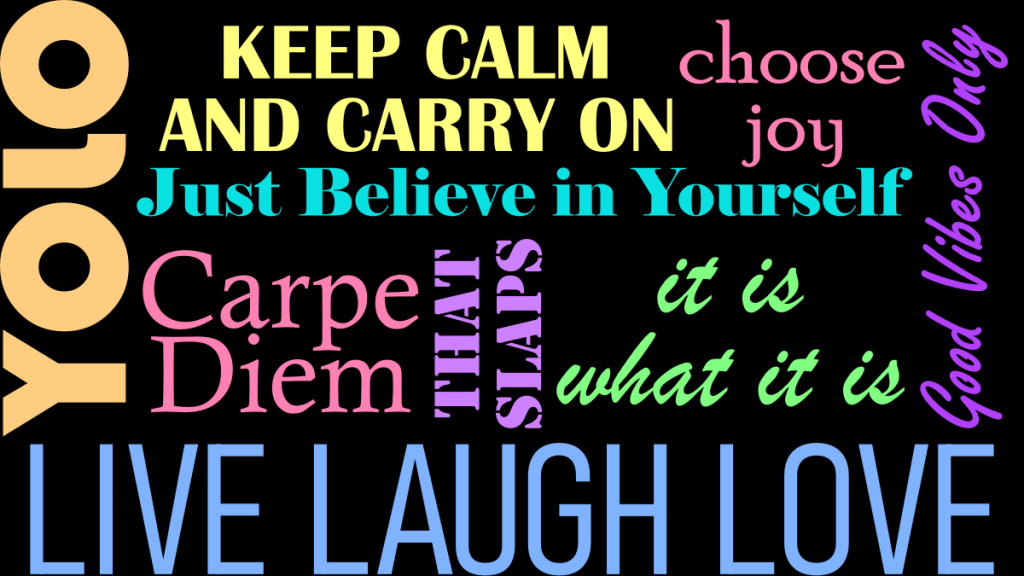
I’ve never really been one to post positive quotes on my refrigerator. I’ve never liked “Bloom Where You’re Planted”. However, I am partial to “What Would You Attempt to do if You Knew You Could Not Fail?” (which IS on my fridge). I’m also a fan of bible verses. But we’re all different. What one person finds annoying; another person finds it inspirational. For a couple of years, a company called Successories had a huge and lucrative business making posters and calendars with stunning outdoor photography and phrases meant to inspire those who worked indoors. A few years later, they were almost outdone by Despair, Inc. who created “Demotivator” parody posters and calendars. Despite this rivalry, both companies are still around reaching both audiences.
These sayings have become a real problem for some people who hang these pithy plaques up and down their hallways. (Do we really need to be told to “Live Love Laugh”?) So, which phrases are the most popular and which are the most cringe-worthy? To find out, Preply surveyed nearly 1,000 Americans (okay, it was 995) ranging in age from 18 to 76 to get their perspective. Half men and half women. Here is what they came up with…
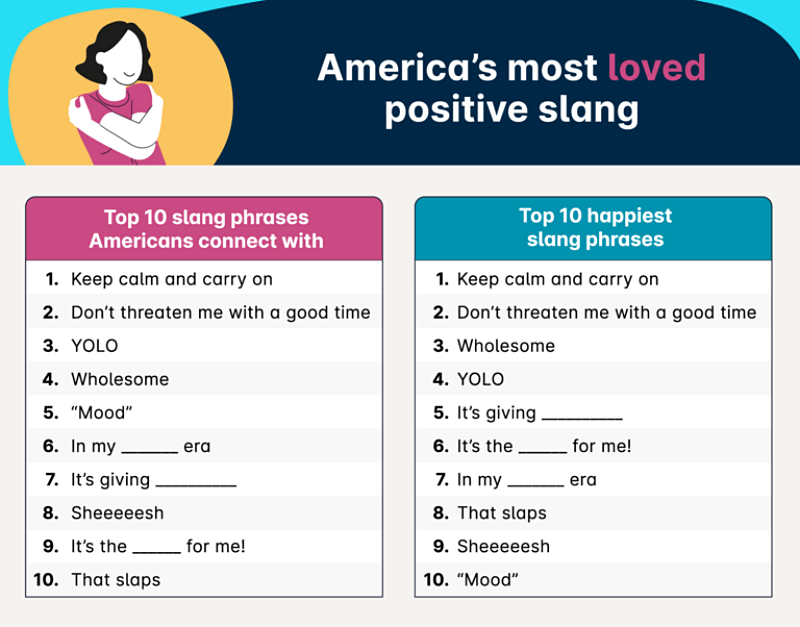
- The majority of Americans believe in using positive phrases to improve their mood.
- 1 in 4 regularly weave positive phrases into their conversations.
- 56% like to include positive phrases in their social media posts. At least sometimes.
- When facing challenges, 1 in 6 assert that they are “extremely likely” to use positive phrases as a source of encouragement for themselves and others.
- Respondents, on average, had two positive phrases jazzing up their homes, whether on a trendy poster or a stylish piece of decor.
- While physical displays are common, Americans express a preference for using these cheery mantras more in conversations and on social media than in visible decor.
- The sources of these affirmations are varied often deriving inspiration from music, interactions with others, and quotes from movies, TV and books.
- According Preply, Colloquialisms (informal phrases or slang expressions) have worked their way into the conversations of the average American. They found that one in five include them in their daily discourse regularly.
“Colloquialisms are linguistic artifacts that offer valuable insights into the complexities of societal values and emotions,” says language expert Sylvia Johnson. “They reflect historical contexts, highlight cultural norms, express emotions, and even shape the ongoing evolution of language itself. For instance, the use of colorful idioms to express frustration or happiness provides a glimpse into the emotional range of a culture.”

The top slang phrase Americans find happiest and feel most connected with is (drumroll please): “Keep calm and carry on”. This phrase, known as a British wartime slogan from 1939, surprisingly outranks newer colloquialisms like “wholesome” and “that slaps.”
Then there is the dark side. Not all slang phrases are favored by all. “Live, laugh, love” tops the list as the phrase that turns the stomach of many. In fact, nearly half (41%) of those polled would like to get rid of it if they could.

“Another phrase under our radar, particularly spurred by the cultural splash that is the Barbie movie, is the adaptable ‘this Barbie is _______ .’ This colloquialism has been flagged by 1 in 10 Americans as downright annoying,” says Preply.

Leave a comment