
The birth of Facebook allowed friends to connect with other friends in a whole new way. It provided a forum where people could speak their mind and say things that they wouldn’t normally say in person whether the topic was about a favorite TV show or politics or anything in between. As these conversations grew, readers became more vocal of their opinions. People began picking sides. They felt the freedom to share their opinions even if it meant hurting others in the process. But you can’t put the genie back in the bottle once he’s gotten out.
The Social Reckoning begins with Frances Haugen (Mikey Madison), data engineer for Facebook, watching a video of a young woman’s DUI arrest. The woman is out of control spewing racist comments to the cops and even threatens one of them twice. Frances is horrified. She knows this woman. How did she become like this? Disturbed by this, the engineer seeks out answers.
From here the story bounces back and forth on a timeline from when Haugen makes her early dark discoveries about her workplace to her sharing her testimony in front of Congress.

A Better Zuckerberg
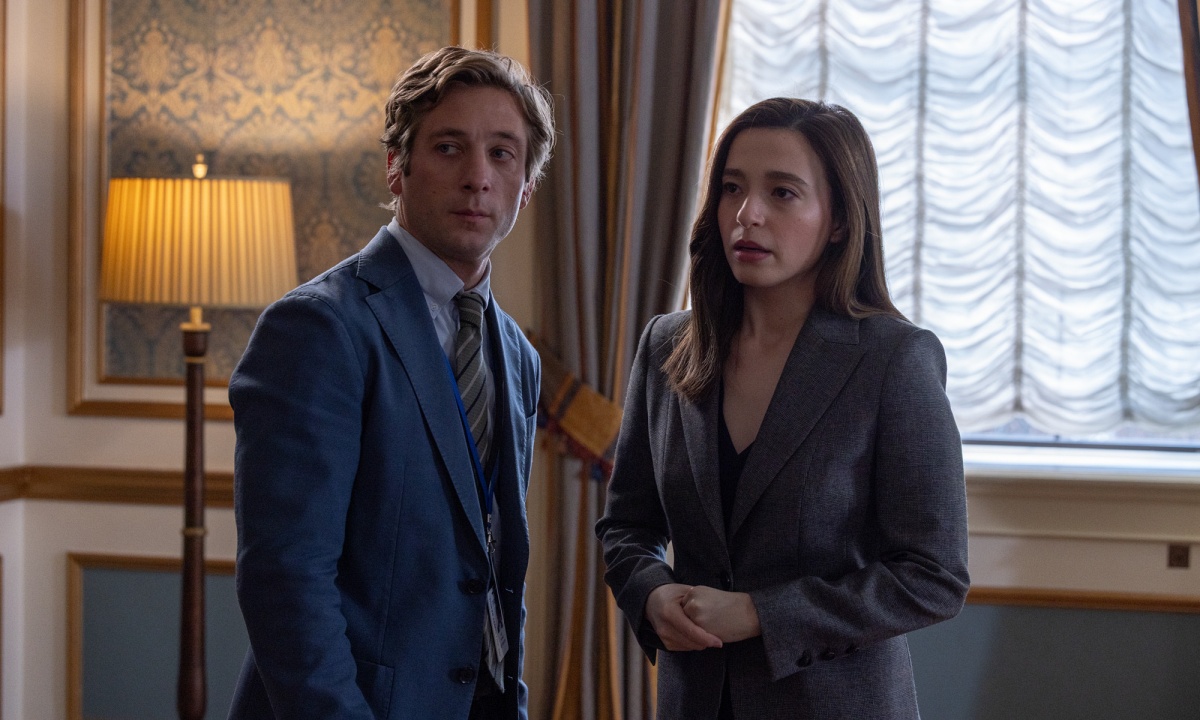
Jeremy Strong portrays a stiff Mark Zuckerberg who spends a considerable amount of time practicing what he will say before Congress while trying his best to come off as relatable. And Jeremy Allen White portrays Jeff Horwitz as a Wall Street Journal writer trying to make sense of Facebook’s most guarded secrets even though he doesn’t understand the high-tech online universe.
He tries reaching out to some Facebook employees about what he has learned, but Frances is the only one who responds. (At least, that is what we are led to believe.) And she’s got a lot to say.
While not a true sequel to 2010’s The Social Network, The Social Reckoning is a continuation about the story of Facebook. The first film focused a lot on the almost unbelievable journey of making Facebook a reality. This next chapter aims to prove that the social media website has become a big blue monster shaping American viewpoints. And a lot of good points are made throughout movie.
The only player from the first movie that is carried over here is Aaron Sorken. He wrote the screenplay for The Social Network. This time around, he directed the movie as well.
It’s a very “talky” movie with a lot of information being thrown at you, but Sorkin does a good job keeping the story from getting bogged down. Overall, I found the film to be entertaining all the way through and was surprised that there is quite a bit of humor in it as well.
Betty Gilpin is hilarious as Christina, the bureau chief of the Wall Street Journal’s San Francisco office and Jeff’s boss. She doesn’t appear a lot in the movie, but when she does, she steals the limelight and has all the best lines.

Great Characters
Christina and Frances rip into Jeff throughout the movie but remains unfazed. He is just as driven about his job as they are, but he’s not going to kill himself over it. Jeff doesn’t care what other people think of him, which makes him the perfect sparring partner for Frances who struggles with friendship. She wants to change the world while hiding and staying invisible. She wants Jeff to fix it all, but that is unrealistic.
I much prefer Jeremy Strong’s interpretation of Mark Zuckerberg over Jessie Eisenberg’s version. With all of Eisenberg’s performances, he essentially plays the same character with the same cadence and smugness. But Strong channels Zuckerberg’s robotic movement, steely-eyed leadership and good posture. That man just can’t bring himself to admit that he ever makes mistakes. He didn’t cause the January 6th riots, but he didn’t stop them either.
There seems to be a struggle here as the movie tries not to get too political, but politics plays a big part of the story anyway. The sad thing is there’s more to this story than what is shown. A father complains to Frances about the bullying his daughter receives on Facebook and/or Instagram. She doesn’t know what to say and basically walks away. That’s it. I would have liked to have seen these characters wrestle with this issue of bullying, but the topic is only briefly discussed.
The Social Reckoning is supposed to be a thriller, but except for some uneasiness that I felt, it doesn’t come across as a thrilling story. Everything leads to what is supposed to be a triumphant ending, but instead, it’s a bit of a disappointment. That’s not to say that the movie is bad, it’s just feels like it’s missing something.
While not as exciting as I had hoped this movie would be, it did make me think. How much responsibility does Zuckerberg share over the negative effects of Facebook? In his mind he thinks none. He touts that he offers freedom of speech with no guardrails. Nothing stands in the way of how people think including fact checking. Sadly, this freedom doesn’t extend to encouraging people to have meaningful discourse. And wasn’t that one of the goals of Facebook in the first place?
Leave a Reply