

Estimated reading time: 6 minutes
On this day in pop culture history, The Blair Witch Project became the nation’s first “found footage” film. It was followed by many copycats due to its massive success.
1999 – The Blair Witch (Found Footage) Project

In October 1997, Daniel Myrick and Eduardo Sánchez and their film crew set up shop in Maryland. With a meager budget, 20 hours of footage was shot over eight days for the supernatural horror film, The Blair Witch Project. Myrick and Sánchez wrote, directed and edited this “true story” about three student filmmakers who traveled to the Black Hills near Burkittsville, Maryland to film a documentary about the mythical Blair Witch legend.
As the story goes, the three showed up with their cameras, but never made it back home, but their film footage was found a year later. It is this “found footage” that is the basis for the film, which format has since been copied many times since.
Despite the fact that Blair Witch is a horror film, very little violence or gore is shown on screen. Instead, this crew made a scary film without showing much of anything.
The film was released on this day in 1999 and grossed nearly $250 million worldwide becoming one of the most successful independent films of all time. Because of the movie’s success, the sequel Book of Shadows: Blair Witch 2 was rushed into production and released in 2000. Then in 2016, the simply named Blair Witch reboot came to theaters. Neither one was nearly as successful as the original and remain mostly forgotten.
1969 – Where Did the Money Go?

It was on this day in 1969 that the United States officially withdrew $500, $1,000, $5,000 and $10,000 bills from circulation after an executive order by President Nixon. They were last printed on December 27, 1945 and are still considered legal tender. Larger bills were used by banks and the federal government for large financial transactions, but since the electronic money system was introduced, the use of large bills was no longer necessary. However, $500 bills are still used in the game of Monopoly.
1853: First World’s Fair
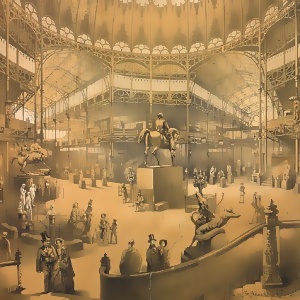
President Franklin Pierce opened the Exhibition of the Industry of All Nations at the first World’s Fair in New York.
1988: Is Elvis Alive?
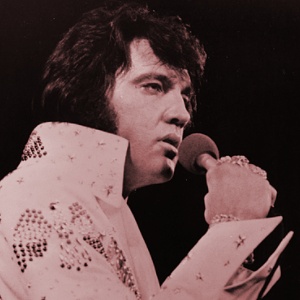
The Nashville radio station WYHY offered $1 million to anyone who could provide proof that Elvis Presley was still alive.
1969: Easy Rider

Directed by Dennis Hopper, Easy Rider opened in theater and starred Hopper, Peter Fonda and Jack Nicholson.
1997: Johnny Bravo was Partially Inspired by The Brady Bunch

Here’s Johnny! Johnny Bravo was Cartoon Network’s second original cartoon series after Dexter’s Laboratory. Produced by Hanna-Barbera and voiced by Jeff Bennett, Johnny was a muscular, conceited, narcissist who looked sort of like James Dean and sounded a lot like Elvis. He lived with his mother, Mamma Bravo (Brenda Vaccaro) and was never shown without his signature sunglasses.
According to Van Partible, the show’s creator, Johnny’s name was inspired by an episode of The Brady Bunch when Greg Brady created Johnny Bravo as his stage name. It also drew inspiration from an episode of The Cheyenne Show where one character was nicknamed Johnny Bravo and it even came from Partible’s name, Efrem Giovanni Bravo Partible. (“Giovanni Bravo” is Italian for “Johnny”)
The cartoon aired from this day in 1997 to August 27, 2004. Each of the 65 episodes contained multiple stories.

Movies Released
- 1969: Easy Rider
- 1995: The Indian in the Cupboard
- 1999: The Blair Witch Project
- 2000: X-Men
- 2006: You, Me and Dupree
- 2010: The Sorcerer’s Apprentice
- 2017: War for the Planet of the Apes
- 2023: Misson: Impossible – Dead Reckoning, Part One

TV Series Debuts
- 1989: Hey Dude! (Nickelodeon)
- 1997: Roar (FOX)
- 1997: Johnny Bravo (Cartoon Network)
- 2008: The Wendy Williams Show (Syndicated)
- 2013: Beware the Batman (Adult Swim)
- 2013: Hillbillies for Hire (CMT)
- 2015: My Giant Life (TLC)

Famous Birthdays
- 1894: Dave Fleischer (animator)
- 1910: William Hanna (animator)
- 1912: Woody Guthrie (singer)
- 1913: Gerald Ford (38th president of the U.S.)
- 1918: Ingmar Bergman (film director)
- 1932: Rosey Grier (football player)
- 1952: Franklin Graham (evangelist)
- 1960: Jane Lynch (actress)
- 1966: Mathew Fox (actor)
- 1966: Brian Selznick (illustrator)
Leave a Reply